

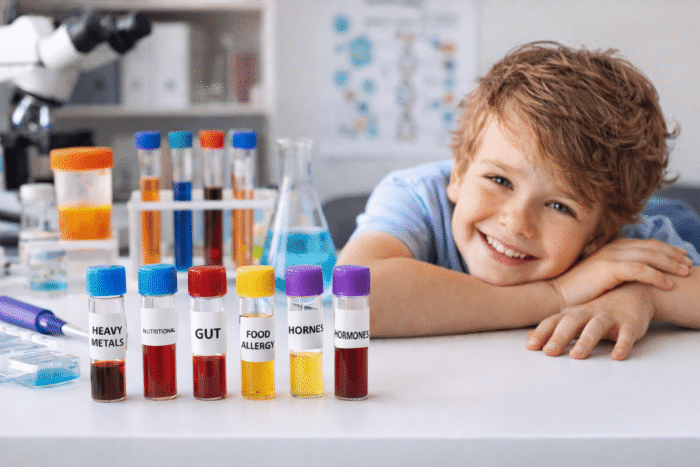
For many individuals on the autism spectrum, underlying biological imbalances can significantly influence behavior, learning, digestion, and overall health. Issues such as digestive dysfunction, nutritional deficiencies, food sensitivities, microbial overgrowth, and environmental toxin exposure are frequently observed in autism.
Laboratory testing can play an important role in identifying these hidden factors. By uncovering specific metabolic or environmental imbalances, healthcare practitioners can design more targeted and personalized intervention strategies.
While there are many laboratory tests that may be helpful depending on the individual, Dr. Kurt Woeller recommends five core laboratory evaluations during the early stages of biomedical intervention for autism. These tests provide a broad overview of metabolic health, gastrointestinal function, immune reactivity to foods, and toxin exposure.
Mosaic Diagnostics (Formerly Great Plains Laboratory)
Mosaic Diagnostics is a specialized laboratory that offers advanced testing designed to evaluate biochemical and metabolic imbalances commonly associated with chronic health conditions, including autism.
Four of the recommended core tests from Mosaic Diagnostics are non-invasive and do not require a traditional blood draw, making them particularly convenient for children.
1. Organic Acids Test (OAT)
The Organic Acids Test (OAT) is one of the most informative metabolic assessments available in functional medicine. This urine-based test evaluates more than 70 metabolic markers, providing insight into several important areas of health.
The OAT can help identify:
- Nutritional deficiencies
- Mitochondrial dysfunction (energy production problems)
- Neurotransmitter metabolism imbalances
- Oxidative stress
- Detoxification issues
- Gut microbial overgrowth, including Candida yeast and Clostridia bacteria
Because many of these metabolic pathways influence brain chemistry and neurological function, the Organic Acids Test can provide valuable information when evaluating individuals on the autism spectrum.
More information: https://labtestsplus.com/product/organic-acids-test/
2. Food MAP + Candida and Yeast Test
Food sensitivities are extremely common in individuals with autism and can contribute to a variety of symptoms, including digestive discomfort, behavioral changes, and immune activation.
The Food MAP + Candida and Yeast Test uses a dried blood spot (finger-prick) sample to evaluate immune responses to a wide range of foods.
This test screens for sensitivities to common foods such as:
- Dairy products
- Gluten-containing grains
- Eggs
- Yeast
- Various other foods
It also evaluates immune reactivity to Candida and other yeast organisms, which can sometimes contribute to gut dysbiosis.
Identifying problematic foods can help guide dietary strategies aimed at reducing inflammation and improving digestive health.
More information: https://labtestsplus.com/product/igg-food-map-with-candida-yeast/
3. Hair Metals Test
Environmental toxins, particularly heavy metals, are a concern in many chronic health conditions. The Hair Metals Test provides a convenient method for evaluating exposure to certain toxic metals as well as deficiencies in essential minerals.
Hair analysis can help detect exposure to metals such as:
- Lead
- Mercury
- Arsenic
- Cadmium
It can also provide insight into important mineral levels, including:
- Zinc
- Selenium
- Lithium
- Other trace minerals involved in neurological and metabolic health
Hair testing offers a longer-term picture of mineral status and toxic metal exposure compared to blood testing, which often reflects more recent exposures.
More information: https://labtestsplus.com/product/metals-hair-test/
4. MycoTOX Profile (Mycotoxin Test)
Mold exposure is increasingly recognized as an important environmental health factor. Certain molds produce toxic compounds known as mycotoxins, which can have significant biological effects.
The MycoTOX Profile is a urine-based test that evaluates exposure to mycotoxins produced by common molds such as:
- Aspergillus
- Penicillium
- Fusarium
- Stachybotrys
These toxins can affect immune function, neurological health, and cellular metabolism. One compound frequently observed in testing is ochratoxin A, a mycotoxin that has been associated with various chronic health conditions.
This test helps determine whether environmental mold exposure may be contributing to health challenges.
More information: https://labtestsplus.com/product/mycotox-mycotoxins-profile-gpl/
Doctors Data Laboratory
In addition to metabolic and environmental testing, a thorough evaluation of the digestive system is often necessary. Doctors Data Laboratory provides advanced stool testing that evaluates both the microbiome and digestive function.
5. GI 360 Profile
The GI 360 Profile is a comprehensive stool analysis that examines multiple aspects of digestive health.
This test evaluates:
- Microbiome diversity and balance
- Beneficial bacteria levels
- Digestive enzyme function
- Markers of intestinal inflammation
- Short-chain fatty acids (important for gut health)
- Pathogens such as parasites, bacteria, and yeast
The GI 360 test complements the Organic Acids Test by providing direct analysis of intestinal organisms and digestive function.
Because gastrointestinal issues are so common in autism—including constipation, diarrhea, microbial imbalance, and inflammation—this test can provide critical insights.
Why These Tests Are Important
These five laboratory tests provide a comprehensive view of several biological systems commonly affected in autism:
- Metabolism and nutrient status
- Digestive health and microbiome balance
- Food sensitivities
- Toxic metal exposure
- Environmental mold toxins
Identifying these imbalances can help guide more individualized treatment strategies and allow healthcare providers to address underlying physiological factors that may influence symptoms.
While these tests represent a strong starting point, additional laboratory evaluations may be recommended depending on each person’s unique clinical picture.
Accessing Functional Laboratory Testing
Lab Tests Plus provides convenient access to many functional and integrative laboratory tests, including those from:
- Mosaic Diagnostics
- Doctors Data Laboratory
More information about available testing can be found at: https://labtestsplus.com
For questions about laboratory testing or ordering options, please contact: LabTestsPlus@gmail.com
Important Medical Disclaimer
The material contained within this document is not intended to replace the services and/or medical advice of a licensed healthcare practitioner, nor is it meant to encourage diagnosis or treatment of disease.
This material has not been reviewed by the Food and Drug Administration (FDA) and is provided strictly for educational purposes only.
Health Training Associates (and associates/affiliates) does not accept legal responsibility for any problems arising from experimentation with the information described herein. Any application of suggestions set forth in this document is at the reader’s discretion and sole risk.
Implementation or experimentation with any supplements, herbs, dietary changes, medications, or lifestyle changes should always be discussed with your (or your child’s) personal physician or qualified healthcare provider first.